Skip to content

TO:
Elementary Principals


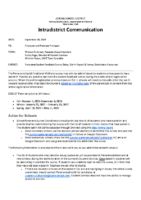
The State of Utah’s Foster Grandparent Program matches caring volunteers (ages 55+) with students who need a little extra help.  To meet state literacy goals, these "grandparents" act as an extra set of hands in the classroom, providing the consistent, one-on-one attention that helps kids thrive.

Benefits to Schools
* Zero Cost: Bring dedicated, trained support into your school at no cost to your budget.
* Literacy Support: Grandparents help students with reading, phonics, and fluency under your guidance.
* Proven Progress: Last year, 84% of Utah students in the program showed measurable academic gains.
* Emotional Support: Beyond tutoring, these mentors help improve student behavior and confidence.

Interested? Check out the flier for more details.


TO:
Elementary Principals

FROM:
Carolyn Gough, Mandy Thurman, Michelle Lovell


Action Required by May 19, 2026

We have secured one-time district funding to purchase K-3 literacy software licenses for home use during summer 2026 and the 2026–27 school year. This is intended to help support the parent resources and engagement component outlined in SB 241.

Key Details:
● Funding covers up to $20 per student license.
● Amira: $20/student (fully covered, no school funds needed)
● Lexia: $34/student ($20 covered by district; school pays remaining $14/student)

Action Needed:
● Choose either Amira or Lexia for your K–3 students.
● Provide the number of needed licenses and, if choosing Lexia, confirm school funding for the additional cost.

Deadline:
If you do not respond by May 19, 2026, your school will not receive district-funded licenses and will need to order and fund them independently.

Please complete the attached form to indicate your selection and submit required information. If you choose Amira, we have also drafted a letter that you can send home to families to communicate this exciting opportunity. It is attached as well.

Please contact Mandy Thurman with any questions.

2026-2027 Digital Literacy License for Home Use Selection Form
Amira Family Letter

TO:
All Administrators
All Administrative Assistants

FROM:
April Gaydosh, Administrator of Human Resources
Rebecca Eastman, HR Generalist


As a reminder regarding our Employee-Funded Sick Bank Policy:
1. Employees are automatically enrolled in the sick bank each year through the annual donation of one (1) annual leave day to the sick bank.

More information regarding the Employee-Funded Sick Bank can be found in policies, DP326NEG -Sick Leave-Educational Support Professionals and DP 324NEG-Sick Leave-Licensed.

For those who wish to opt out of participation in the Employee-Funded Sick Bank, keep an eye out for instructions starting in the July issues of JEM and JAM.

*First Year Educational Support Professionals and hourly employees are not eligible
for sick bank, therefore, a sick bank day will not be deducted (if applicable).

DATE:
May 14, 2026

TO:
Principals
Special Education Teachers (Preschool and School Age)
Speech-Language Pathologists

FROM:
Lisa Robinson, Administrator of Schools
Kim Lloyd, Director of Special Education

SUBJECT: 
Extended Year for Special Educator Stipend Days 2025-26


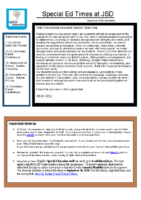
The legislation allows a specific group of special educators to work up to 4 additional days for a $200/day stipend (plus applicable benefits). The Bill applies to Special Education Teachers (Preschool and School-Age) and Speech-Language Pathologists only (Speech-Language Technicians are not included). The number of days and stipend amount are based upon the educators assigned FTE equivalent. Teachers who have been hired with an Associate Educator License will count as licensed teachers and will be eligible for the stipend. Days can be worked 2 weeks before or after your contract.

Eligible staff that have days left to work, and did not work all of their allotted days in the fall, are required to complete an online survey to be paid for these days. After you have completed working the days, simply click on the link below to start the survey. Days worked must be full or half days and not a combination of assorted hours and must be worked in your assigned building(s). 

The days available for you to work are: June 8-12th, 16-19th, and 22nd. Please remember that June 5th is the last contract day and June 15th is a holiday. These days do not count toward Extended Year Days.

It is important to remember:
Below is the link to submit the days after you have worked. When asked for the approver for your submission do not put your principal or LEA. Please put amanda.hamblin@jordandistrict.org so that the submission can be approved through the Special Education office and be sent to the State Office for payment. If you list your building supervisor as the approver, your request will not be submitted for payment.

https://usbe.az1.qualtrics.com/jfe/form/SV_cYBjLsW7tzP9Nau

Please read the survey carefully, making sure you answer all of the questions listed, as you will be paid according to what the survey generates. Only those that complete the survey will be paid. Any timesheets submitted directly to the Special Ed. or Payroll departments will not be paid. Please note that the window for completing the survey closes June 26, 2026.

Please remember you cannot count the days you already worked and were paid for in the fall. You can only count the days you work after your last contract date at the end of the 2025-26 school year. The State Board of Education has discontinued any leniency on dates that you work. You may ONLY work and report the two weeks after your last contract day. Therefore, you will only be paid for dates that are between June 8 to June 22, 2026 (excluding weekends and holidays) and only the number of days you have remaining from fall 2025-26.

As you plan for the coming year, keep in mind the legislature will presumably award days for the 2026-27 school year, which you can begin working two weeks prior to your first contract day, which is August 10, 2026. More information about next year’s days will be forthcoming. If you have questions, or need help with the survey, please contact Amanda Hamblin at amanda.hamblin@jordandistrict.org or 801-567-8177.


DATE:
May 14, 2026

TO:
Principals
Assistant Principals

FROM:
Michael Anderson, Associate Superintendent
Travis Hamblin, Director of Student Services

SUBJECT:
Free Safety & Behavior Conference


The S4K Safety & Behavior Conference is free for any administrator, teacher, or other educator that signs up. This conference is three (3) days of hands-on, real-world crisis response strategies for creating positive cultures through safety and support. 

Topics include crisis prevention, de-escalation, mental health awareness, PBIS, MTSS, strategies to reduce bullying, implementing protective factors and strategies to build a safer, more connect school community. 

Use this link to sign up if you are interested. The attached flyer provides more information about the conference, registration, and registration for larger school groups. 

DATE: 
May 21, 2026

TO: 
All Building Administrators

FROM:
Michael Anderson, Associate Superintendent
Travis Hamblin, Director, Student Services
Caleb Olson, Enrollment Consultant, Student Services

SUBJECT:
June 2026 Discipline Entry Deadlines


In order to allow time for the weekly discipline review process and for correction of any errors identified through state reporting processes, please have all discipline entries for the 2025-26 school year entered no later than June 12, 2026. Discipline can and should be entered earlier, if possible.

Discipline entries entered by June 12 will be reviewed and corrections will be sent to schools on June 18. These corrections should be processed by schools as soon as possible and no later than June 25.

DATE:  
May 14, 2026

TO: 
Principals
Assistant Principals

FROM:
Michael Anderson, Associate Superintendent
Travis Hamblin, Director of Student Services
Matt Alvernaz, School Safety Coordinator

SUBJECT:
Bleed Control (TECC) and First Aid Kits


New TECC kits (aka Bleed Control kits) for classrooms will be delivered to each school during the summer. Each school will also receive several First Aid Kits.

TECC Kits (Bleed Control):

  • Kits currently in your building are being replaced with new and updated kits.
  • Please collect the TECC kits from each classroom or instructional areas as a part of your end-of-year check-out process.
    • Large Bleed Kits or those mounted to a wall (usually in a Pelican storage case) do not need to be collected.
    • A typical TECC kit is pictured below.
  • TECC kits will be delivered by the District to the school at some point during the summer.
    • The old TECC kits that were collected at check-out will be picked up when the new ones are delivered.
    • Schools should retain at least 10 of the old TECC kits to place in other areas/rooms or for emergency use as the school sees fit.
    • A new TECC kit should be distributed to each classroom/instructional area and other larger gathering areas such as gymnasiums and auditoriums.
  • Each School Safety Specialist (Administrator assigned school safety) should annually inventory the TECC kits in the school.

First Aid Kits:

  • Will be delivered to the school during the summer at or about the same time as the TECC kits.
  • One First Aid Kit should be placed in the main office and in each gymnasium.

If you have any questions or you would like to request to retain additional old TECC kits, please contact Matt Alvernaz (School Safety Coordinator) at matt.alvernaz@jordandistrict.org or 801-567-8623.

DATE:  
Thursday, May 14, 2026

TO: 
All School Administrators

FROM:  
Carolyn Gough, Administrator of Teaching and Learning
Ben Jameson, Director of Assessment, Research and Accountability

SUBJECT: 
2026 WIDA ACCESS Results in Tableau


2026 WIDA ACCESS results are now in Tableau.  Viewers may see language proficiency levels over time for the following categories:

  • Overall Composite Score
  • Composite Scores (Comprehension – listening and reading; Literacy = reading and writing; and Oral = listening and speaking)
  • Reporting Categories: Listening, Reading, Speaking and Writing

Viewers may also see growth target data over time based on the state’s growth goals for each student as well as student participation over time on the WIDA ACCESS.

Included in the dashboard is a student list with historical WIDA ACCESS results going back to 2022.  Viewers may filter results using a variety of demographic and assessment filters to create lists of students for support and intervention planning for the 2026-27 school year.

Viewers may access the WIDA ACCESS summary dashboard here.

For questions about the WIDA ACCESS assessment and results or this summary dashboard, please contact Ben Jameson in Assessment, Research & Accountability.

TO:
Elementary Principals

FROM:
Carolyn Gough, Administrator of Teaching & Learning


Optional Summer Read-a-Thon Funding Opportunity for Utah Elementary Schools
Sponsored by Utah Community Builders

Dear Elementary School Leaders,

We are excited to announce the launch of our Utah Summer Read-a-Thon Program for Utah elementary schools, sponsored by Utah Community Builders, a program of the Utah Chamber. This summer, we invite schools to spark a love of reading that lasts a lifetime through fun, high-energy literacy experiences that keep students engaged all summer long. Whether through reading challenges, themed events, family literacy nights, or community celebrations, this opportunity is designed to help make reading the highlight of summer for elementary students across Utah.

Funding Opportunity
Selected Utah elementary schools and districts will receive up to $500 to support their Summer Read-a-Thon efforts. Funds may be used for:
* Student incentives and prizes
* Pizza, snacks, or refreshments during read-a-thon
* Event materials and supplies
* Creative and engaging reading activities and experiences

Program Timeline
Applications Open: May 8, 2026
Application Deadline: May 22, 2026
Award Notifications: May 27, 2026
Program Period: June–August 2026
Final Reporting Deadline: one week after the event

Eligibility
Open to all Utah public elementary schools
Programs must take place between June and August 2026

Application Requirements
Schools interested in participating will complete this short application form that includes:
* School and district information
* Primary contact information
* Brief overview of planned Summer Read-a-Thon activities
* Completed W-9 form for payment processing

Post-Program Requirements
To receive and retain funding, participating schools must submit the following after their event:
* Number of students served
* Pages read at the event
* Description of activities completed
* 3–4 photos highlighting participation and impact

Please note: Submission of all follow-up materials is required. Schools that do not complete the required reporting and documentation may be required to return awarded funds to Utah Community Builders by August 7, 2026.

Schools that actively engage, complete all reporting requirements, and build strong partnerships through this initiative will be prioritized for future literacy and community-based funding opportunities. Utah Community Builders has additional literacy initiatives and partnership opportunities planned, and we look forward to continuing to work with schools committed to expanding student reading engagement across Utah.

TO:
Administrators, Principals, School Admin Assistants

FROM:
Katie Bastian, Nutrition Services Director


Jordan School District Summer Meals Program will be offered at 4 school sites this summer. Meals are free for children 18 years of age and younger. Serving days and times are included on the attached flyers. Please share this information with your school community in the next couple of weeks before school is out.

DATE: 
May 14, 2026

TO:
All Principals

FROM:
Michael Anderson, Associate Superintendent
Travis Hamblin, Director of Student Services
Melanie Dawson, Principal Rivers Edge
Amanda Bollinger, Teaching and Learning Staff Assistant
Brian King, Special Education Staff Assistant
McKinley Withers, Health and Wellness Consultant
Michelle Love-Day, Director of Language and Culture

SUBJECT:  
School Self-Assessment: The Tiered Fidelity Inventory


Multi-Tiered Systems of Support (MTSS) require the use of ongoing data to continually assess needs. To continue the work of implementing a consistent MTSS framework within the District, additional information is being requested to help evaluate the needs and desires for MTSS training provided by District staff (District MTSS Team).

Principals, please complete this survey to indicate your level of need in the following MTSS systems:

  • PBL - Proficiency Based Learning
  • PBIS - Positive Behavioral Interventions & Supports
  • RTI - Response to Intervention
  • SEW - Social Emotional Wellness
  • PLC - Professional Learning Communities

DATE:
May 14, 2026

TO:
School Principals and Administrative Assistants

FROM:
Administrators of Schools

SUBJECT:
Principal Year-End Checkout for 2025-26


Attached are the items to be completed for principal checkout.

  • Items highlighted in yellow will be reviewed at check out with your Administrator of Schools.

TO:
All administrators and Admin Assistants

FROM:
Dan Ellis, Director of Accounting, Budgets, and Audits


There was a problem with the posting of insurance to program accounts in the month of April. Therefore, reports sent in April are incorrect and the issue will be corrected as soon as possible once Qmlativ is up and running.

TO:
Administrators
Counselors

FROM:
Michael Anderson, Associate Superintendent
Michelle Love-Day, Director of Language and Culture Services


Join Language and Culture Services for a training session on Discriminatory Language. We will explore the impact of discriminatory language in K-12 settings and provide recommendations to administrators and counselors on how to address discriminatory language. Several resources will be shared with participants, including a facilitated discussion guide to use with students.

You can select a morning session or an afternoon session.

DATE: 
Thursday, May 7, 2026

TO: 
All School Administrators

FROM:
Carolyn Gough, Administrator of Teaching and Learning
Ben Jameson, Director of Assessment, Research and Accountability
Michelle Love-Day, Director of Language & Culture Services

SUBJECT:      WIDA ACCESS Score Reports and Parent Reports


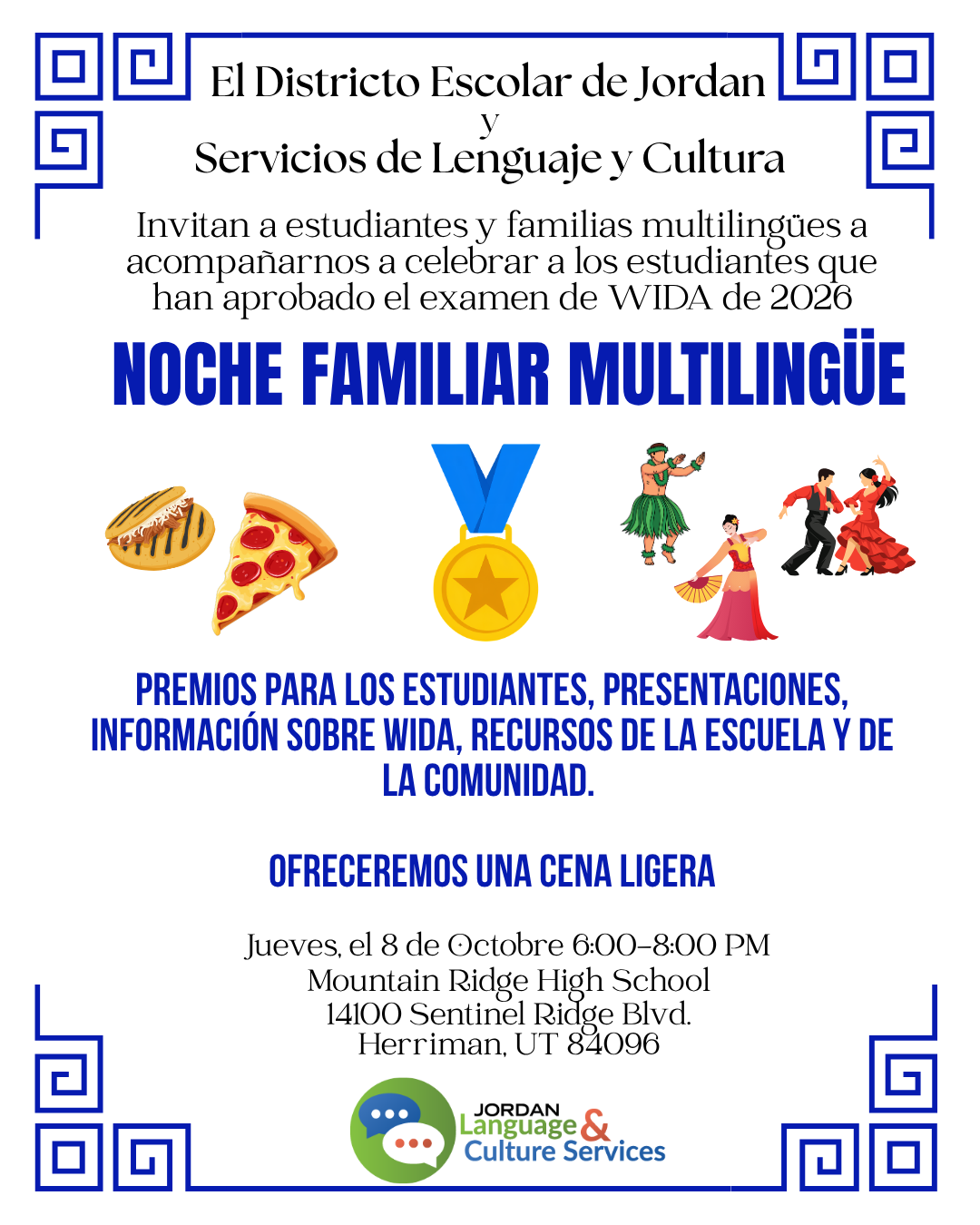
WIDA ACCESS scores were made available on April 30th. A representative from Assessment, Research, and Accountability delivered score reports to schools on May 4-5. Scores will also be available in Tableau, Skyward and Panorama soon.

Here are some things to keep in mind regarding this year's scores, as shared by WIDA: 

"For the last few years, WIDA has been revising Kindergarten ACCESS for ELLs (now WIDA ACCESS for Kindergarten) and ACCESS for ELLs (now WIDA ACCESS) to incorporate the WIDA English Language Development (ELD) Standards Framework, 2020 Edition. This school year, you tested students with these revised assessments! Now that you’re done with testing, WIDA needs to ensure that student scores still provide an accurate picture of a student’s English language development. This process happens during a standard setting event after the first annual administration of the revised assessments. The ACCESS standard setting event is scheduled for July 2026.

Because of standard setting, you’ll need to approach your ACCESS score reports in 2026 with additional attention. As you prepare to receive ACCESS score reports in 2026, know that

  • You will receive score reports on your regular reporting timeline.
  • You can use 2025–2026 ACCESS scores to make decisions about students for the 2026–2027 school year, either to exit students or decide on classroom placement.
    • Students that receive a composite score of at least 4.2 and a speaking score of at least 3.5 will still be considered proficient and will "pass" WIDA. 
  • You should treat 2025–2026 ACCESS scale scores as a new baseline to measure future growth against (don't compare scale scores from previous years).
  • You should use 2025–2026 ACCESS proficiency level scores with caution prior to the ACCESS Standard Setting 2026 event as they will reflect the old proficiency level cut scores.

Learn more about ACCESS in the 2025–2026 school year on the WIDA ACCESS in 2025–2026 page."

Please review the the 2026 WIDA ACCESS Interpretive Guide for Score Reports to understand how to interpret WIDA ACCESS scores.

If there are any updates to be aware of after the standard setting event, we will share that during our initial Task Force meeting next Fall.

ANNUAL NOTIFICATION LETTERS
Schools are expected to send home Annual Notification Letters, along with the Student Score Report, each year by the last day of school. This year, annual notification letters will be sent home digitally via ELLevation using their new Family Communications Tool.

Language & Culture Services will set up the letter cycle and add students to the cycle for each school in Forms on the ELLevation platform. We will need your school's help in monitoring the status of these letters to ensure they are seen by parents. To learn about this process, check out this Annual Notification Letters document which explains the process. We recommend working with your ELD Lead, office staff, and Language Teacher Specialist through this process.

This information was shared with your office staff when WIDA Score Reports were dropped off on May 4th or 5th.

Please reach out to your school's Language Teacher Specialist in Language & Culture Services if you need any support with the annual notification letters. For questions about WIDA ACCESS scores or testing, please contact JoLynn Snelgrove in Assessment, Research & Accountability.


DATE:
May 7, 2026

TO:  
Principals and Assistant Principals

FROM: 
Michael Anderson, Associate Superintendent
Travis Hamblin, Director of Student Services
McKinley Withers, Health & Wellness Consultant
Michelle Reyes, Attendance/Prevention Specialist, Health & Wellness

SUBJECT: 
High Impact Attendance Actions for May and the May 2026 Attendance Newsletter


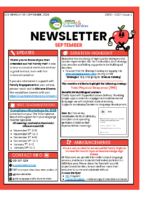
Key actions schools can take in May to maintain student engagement and attendance through the end of the year. Also, check out the May Edition of the attendance Newsletter.

1. Strategic Student Support
Identify students who are on the "cusp" of becoming chronically absent.

  • Data Analysis: Use attendance dashboards to find students who have missed between 10% and 15% of the year.
  • Targeted Outreach: Instead of focusing only on severe cases, prioritize these "moderately" absent students. A proactive nudge now can prevent them from crossing the chronic threshold by June.

2. Re-Engage Families after Testing
High-stakes testing can lead to burnout and "return anxiety" for students who have already missed significant time. After students have pushed through the testing they may feel ready for a break, and while it is important to recharge, this should not signal that all instruction has ended.

  • “Send proactive reminders” letting students and families know that important learning is still happening to prepare their students for the next year and it shouldn’t be missed.
  • “Create A Post-Testing Watch List with Targeted Messaging”: find students that have missed 1 of the last 5 since testing closed, have had recent attendance changes or are nearing the 10% threshold to send targeted encouraging messages to.
  • Spring Communication Plan: Ensure families and students know about all of the important dates and events from now until the end of the year. Include all of the “unmissable days” (graduations/promotions, class parties, performances, celebrations, etc.)

3. Launch a Finish Strong Campaign
A campaign dedicated to keeping attendance up through the end of the school year can pay off. What might this include?

  • “Grade Level Attendance Challenges”: This may help you get students in on the game and encourage each other to show up.
  • “Weekly Shout-outs”: Everyone likes to be recognized for their efforts and hard work. Celebrating good or improved attendance can keep up the momentum.
  • “Friendly Schoolwide Competition”: Aiming for improvements week over week and celebrating improvements can also create momentum.
  • “Emphasize the ‘why’ ”: It can be easy to reach burnout as the end of the year approaches, but a continuous reminder that important learning is still happening helps keep students on track for the next year and can remove the misconception that nothing important happens at the end of the year.

Questions? Contact Michelle Reyes at michelle.reyes@jordandistrict.org or 801-567-8205.

TO:
All Employees

FROM:
Sarah Palmer, Director of Payroll


ANNUAL/PERSONAL LEAVE DURING THE LAST FIVE DAYS OF SCHOOL
May 29th – June 4th
All Licensed and ESP Employees

Per District policy, annual or personal leave days may not be used during the last five days of school, unless the leave reason is listed in policy as an exception. If any of the exceptions do apply, you must provide both the leave reason and the policy exception in the time off description. If these exceptions are not applicable, your annual/personal leave day will be changed to a no-pay day as per policy.

DP335NEG-Annual Leave-Licensed
DP335B-Annual Leave-Education Support Professionals

7. Annual leave shall not be taken during the last five (5) days that students are in school except under the following conditions:

a. To attend the wedding of a near relative including child, father, mother, brother, sister, grandchild, grandparents or same to one’s spouse or any other person who is a member of the same household as the employee.
b. To attend to personal or business matters which require the employee’s attendance and scheduling is beyond the employee’s control.
c. First year employees who notify their supervisor in writing that they are ill.


TEACHER CHECKOUT DAY – JUNE 5
All Licensed Employees

As per District policy, DP335NEG-Annual Leave-Licensed, licensed employees may not take annual/personal leave on the teacher checkout day on June 5th. However, through correlation with the principal, they may arrange to exchange this day for another non-contract day.


TIME TRACKING AND TIME OFF
Last Day of School - June 4

Please make sure all of your Time Tracking and time off is submitted and approved before leaving for summer break.

Last contract day for the 2025-26 school year
June 4th – last day of school (180 days)
June 5th – teacher checkout (184 and 187 days)
June 12th – last day for elementary administrative assistants (206 days)
June 19th – last day for extended teachers/specialists/coordinators (207 days)

Date:
April 30, 2026

To: 
All Principals
All Budget Directors

From:
John Larsen, Business Administrator
Daniel Ellis, Director of Accounting, Budgets & Audits
April Gaydosh, Administrator, Human Resources
Steffany Ellsworth, Support Services Manager, Information Systems
Bonnie Brennan, Director of Insurance Services
Sarah Palmer, Director of Payroll
Kurt Prusse, Director of Purchasing

Subject:
2025-26 Year-End Finance Processing Deadlines


Please observe the attached critical deadlines regarding the financial year-end processes for the 2025-26 school year. Please review these dates as they could have a major impact on your location’s ability to operate.

DATE:
April 29, 2026

TO:
Principals
Assistant Principals
School Safety Specialists

FROM: 
Michael Anderson, Associate Superintendent
Travis Hamblin, Director of Student Services
Matt Alvernaz, School Safety Coordinator

SUBJECT:
Monthly Drill Preparation (Drill of Choice)


Our monthly drill preparation will be held on May 6th at 2:40 PM, 3:10 PM, and again at 3:40 PM. This month each school will conduct a drill of choice.  Administrators will choose any one of the safety drills previously covered throughout the year.  The intent is to identify the drill where the most training is needed based on the needs of each school. The training will be an overview of conducting drills and the use of SRP.  Each School Safety Specialist is expected to attend along with administrators assigned to oversee school safety.  All other administrators are welcomed to attend as well. The meeting is also open to any staff who may be interested.

After each monthly training all school staff should be trained by the administrator over school safety and the School Safety Specialist. After being trained each month, teachers should educate their students on each safety drill. Additionally, schools should communicate with their patrons regarding Standard Response Protocol(s) (SRP) and the drill being conducted each month. Videos, handouts, and other resources can be found at the link(s) below.

Information regarding Standard Response Protocol and other emergency procedures can be found in the Jordan School District Safety Manual.  This will be an opportunity to ask questions and share ideas amongst the schools.  Consider your school’s identified deficiencies and needed areas of improvement when determining which drill to select.

We will be holding this meeting over ZOOM so please join using this link.