TO:
Elementary Principals and Elementary Assistant Principals
FROM:
Carolyn Gough, Administrator of Teaching & Learning
Todd Theobald, Teaching and Learning
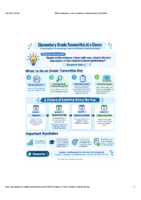
Grade Transmittal Day is Oct. 19, and all elementary teachers are expected to review student evidence and record Quarter 1 proficiency levels in Skyward. Quarter 1 provides an important snapshot of where students are in their learning at this point in the year, even though a formal report card is not generated until Semester 1. Teachers should record a current proficiency level for each strand where they have enough meaningful evidence to make a reasonable determination, using the full-year proficiency scale as the reference point. Please review the JSD Elementary Grade Transmittal Expectations for a quick overview of what to record, why these snapshots matter, and how expectations progress throughout the year.
JSD Elementary Grade Transmittal Expectations
Grade Transmittal Day provides teachers with dedicated time to review student evidence, reconcile proficiency levels, and ensure that Skyward accurately reflects each student’s current learning. The goal is not to create a perfect or final judgment of student performance. The goal is to provide an accurate snapshot of where each student is at that point in time.
What should teachers do?
For each subject area, review the overall strand proficiency level in Skyward and ask: “Based on the evidence I have right now, what is the best description of this student’s current proficiency?”
The proficiency level recorded should reflect the student’s current performance in relation to the full grade-level standard and proficiency scale, even if every portion of the standard has not yet been taught.
Teachers should enter a proficiency level whenever they have enough meaningful evidence to make a reasonable determination. This does not require perfect or exhaustive evidence. If the evidence available provides a reasonable picture of where the student currently is, that information should be recorded.
A blank should generally indicate that there is not yet enough evidence to make a reasonable determination.
Why does this matter?
Quarterly proficiency levels create a record of student learning over time.
Even though elementary report cards are only generated at the end of Semester 1 and Semester 2, Quarter 1 and Quarter 3 scores still provide valuable snapshots. These records can:
- Help document student growth across the year,
- Provide useful information if a student transfers to another school or district,
- Support communication with parents and future teachers, and
- Ensure that reported proficiency levels accurately reflect what students currently know and can do.
Ideally, the information entered in Skyward should not be a surprise to families. Teachers should be communicating student progress early, often, and consistently throughout the year.
What should be recorded at each checkpoint?
Quarter 1 - Snapshot - Record current proficiency levels for the strands where you have meaningful evidence. Students are still early in the learning process, so Level 1 and Level 2 scores may be entirely appropriate.
Semester 1 - Semester Picture - Review and reconcile the Semester 1 proficiency level for each strand that has been meaningfully measured. In English Language Arts, students should have a proficiency level for all three strands: Reading, Writing, and Speaking & Listening.
Some areas in other subjects may still be blank if they have not yet been sufficiently measured.
Quarter 3 - Updated Snapshot - Update proficiency levels based on the evidence collected since Semester 1. The picture of student learning should continue to become more complete as the year progresses.
Semester 2 - Complete Picture - By the end of the year, the full grade-level core should have been taught, and teachers should generally have a proficiency level recorded for every strand.
There may be rare circumstances where an exception is appropriate. In those cases, teachers should work with their administrator.
One important reminder
A proficiency level is not based on whether a student is “on track for this time of year.” It is based on the full-year proficiency scale.
For example, if a student has successfully learned everything that has been taught so far but their current evidence places them at Level 2 on the full standard, Level 2 is the accurate proficiency level to report.
The purpose of Grade Transmittal Day is simple:
Review the evidence → Reconcile the overall proficiency level → Document where the student is right now.